Schedule a free call
Free · no commitment · no documents · by video or phone, at a time you pick
 Covered by the HSE under the Cross Border Directive.
A cataract slowly clouds the lens inside your eye, and during a long wait reading, driving at night and recognising faces can become harder.
Your cataract operation without the public wait: a fixed price in a private hospital in Spain, paid back by the HSE. The hospital, the surgeon, the price and your stay are in writing before you decide.
Free · no commitment · no documents · by video or phone, at a time you pick


Your right under EU law since 2011
2,266claims paid back to Irish patients in 2024
Your rights under the schemeAt the end of September 2026, 14,382 adults were waiting for eye surgery, which includes cataract operations, in a public hospital in Ireland. More than four in ten of them had waited longer than six months.
National Treatment Purchase Fund, inpatient and day-case waiting list by specialty, September 2026
Eight steps from the first conversation to your refund. You commit at step 4, not before.
Before you commit
Stop at any time, at no cost
You
Schedule a free call, by video or phone, at a time you pick. We answer your questions and tell you how the route works for a cataract operation.
You · about 15 minutes
Your details and documents, uploaded securely. You need a referral from your GP or from the eye consultant you saw as a public patient, or a letter showing you are on the public waiting list for cataract surgery.
Ablement · within 1 to 2 working days
You get a clear yes or no on whether you are eligible for a cataract operation in Spain.
Ablement · within 5 working days of a complete file
We ask the hospitals and send you one written proposal: the hospital, the surgeon, the price of your cataract operation, the dates and your expected refund.
After you commit
We stay with you to the refund
The hospital
The hospital confirms your date in writing within 10 working days of your acceptance, and then you book your travel. Plan for a short trip for each eye; you fly home once the surgeon has checked the eye, and the hospital's written plan gives the timing.
The hospital
As a cataract operation is a day case, you can talk to your surgeon by video or phone before you travel, where the hospital offers it, or meet in person at the hospital. Then you have your operation and fly home when the surgeon says you are fit to fly. You pay the hospital directly and send us the documents for your claim.
Ablement · within 5 working days of your return
We send your signed claim to the HSE and follow it until you are paid. The HSE paid in 45 days on average in 2024.
Your GP
Your GP and the public system take over, as if you had the operation at home. Your GP follows up, and you check with your GP before you drive again.
One contact person, from the first conversation to the refund.
Easy to reach at every step. A family member can join every call.
Nothing. The hospital that treats you pays us a referral fee.
One fixed price for your cataract operation, in writing before you commit. You pay the hospital directly, before the HSE pays you back.
Pays you back up to what a cataract operation costs in the Irish public system, at the day-case rate, in 45 days on average (2024).
The HSE pays back the cost up to what a cataract operation costs in an Irish public hospital. In Ireland it is a day case, so it is paid at the day-case rate, the rate for treatment without an overnight stay. The refund reaches you after the treatment, paid into your own account, and it does not cover your flights, your hotel or the person who comes with you. You see the hospital's price, fixed in writing, before you accept; where no hospital's price is within what the refund covers, we set out the gap in writing and leave the decision to you.
What is paid back, and when
Kaare Beck-Fischer, Chief Executive Officer
No commitment and no documents needed.
Free · no commitment · no documents · by video or phone, at a time you pick
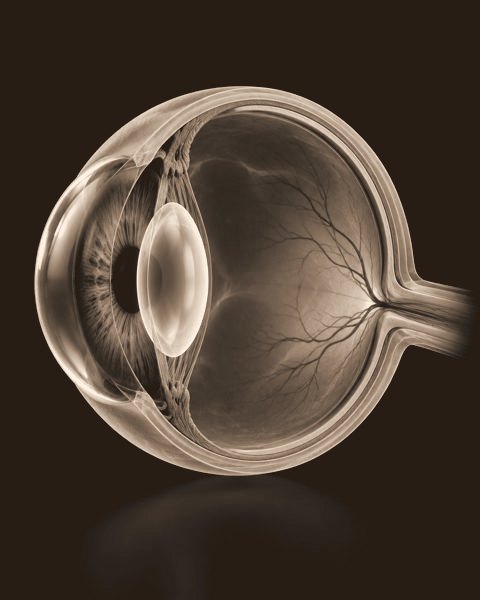
A cataract is the lens inside the eye turning cloudy, which blurs and dims what you see. In the operation the surgeon makes a tiny cut at the edge of the cornea, breaks up the cloudy lens with ultrasound and removes it, and puts a clear, folded artificial lens in its place, where it unfolds and stays for life. The eye is numbed with drops or an injection, you are awake, and the operation itself takes about twenty minutes.
You wear a protective shield at first and use eye drops for some weeks. Sight usually improves within days and settles over a few weeks, and you will probably need new glasses once it has. One eye is usually done at a time; the surgeon decides when the second eye can follow.
Short answers to what people ask us most. Open a question to read the answer.
All frequently asked questionsYour question isn't here?
Ask us in the chat Or send us a message from the Contact pageUsually one eye is done at a time. Some hospitals operate on the second eye a few days later, so that one trip covers both; the surgeon decides what is right for you. The HSE pays one rate for each admission, whatever is done during it, so we ask the hospital to treat each eye as its own day case with its own invoice, and we claim each on its own. Your proposal shows the expected refund for both eyes before you commit, and a prior notification form lets you ask the HSE for an indication of the amount before you travel.
Once the surgeon has checked your eye after the operation. Each patient is different, so the surgeon makes the call, and your written proposal gives the hospital's usual timing. It helps to have someone with you on the day of the operation.
The surgeon tells you before you leave Spain, and the discharge report puts it in writing for your GP. It differs from person to person, so ask the surgeon in Spain, and your GP once you are home. Check with your GP before you drive again.
No. The HSE's rules do not ask you to leave the list to use the scheme, and you stay on it until you have been treated. Once your operation is done abroad, you let the Irish hospital know, so it can take you off the list. If you change your mind before then, nothing has changed at home.
Yes. You pay the hospital directly, and the HSE pays you back afterwards, in 45 days on average in 2024. Some people use savings, help from their family or a credit union loan. We do not lend money or arrange loans, and no money of yours passes through us.
You see the hospital and the surgeon's name in writing before you decide anything, and you have a consultation with the surgeon before the operation. Every hospital we work with must be registered with its country's health authorities, use surgeons who specialise in the operation, give its price and its terms on complications in writing, and give you an English-speaking contact person. The hospital that treats you is responsible for your care, and it must have a complaints procedure. We help you deal with the hospital, and at home your GP takes over as after any operation.
There is no catch. The hospital that treats you pays us a referral fee; you never pay us anything, and the hospital's price is fixed in writing before you accept. You can stop at any time before you sign with the hospital.
The Cross Border Directive is EU law, and the HSE paid 2,266 claims from Irish patients in 2024 alone. The refund is yours when the paperwork is right: the referral, the consultation, the itemised invoice and your receipt. We prepare the claim with you, and before you travel you can send the HSE a prior notification, which tells you in advance whether you are eligible and gives an indication of the amount.
Yes. A family member can join every call and meeting, be named on your Consent Form and travel with you. Their travel and hotel are your own cost.
One free call, by video or phone. No commitment and no documents.

by video or phone, at a time you pick
Already spoken with us? Start your case →