Schedule a free call
Free · no commitment · no documents · by video or phone, at a time you pick
 Covered by your country's public health service under the Cross Border Directive.
Waiting for a new knee often means pain on the stairs, stiffness after sitting and shorter walks, month after month.
A new knee without the public wait: a fixed price in a private hospital in another EU country, paid back by your public health service. The hospital, the surgeon, the price and your stay are in writing before you decide.
Free · no commitment · no documents · by video or phone, at a time you pick


Your right under EU law since 2011
290,000claims paid back to patients across Europe in 2024
Your rights under the schemeWaiting times for a knee replacement are not the same across the EU; they vary from country to country and from region to region. Tell us how long you have waited, and we look at it with you.
Your own public health service's published waiting times; no single European figure is quoted here
Eight steps from the first conversation to your refund. You commit at step 4, not before.
Before you commit
Stop at any time, at no cost
You
Schedule a free call, by video or phone, at a time you pick. We check your country's rules with you and tell you how the route works for a knee replacement.
You · about 15 minutes
Your details and documents, uploaded securely. You usually need a referral for a knee replacement from your own doctor, or a letter showing you are on a public waiting list for it; we tell you what your country asks for.
Ablement · within 1 to 2 working days
You get a clear yes or no on whether you are eligible for a knee replacement in another EU country, checked against your country's rules.
Ablement · within 5 working days of a complete file
We ask the hospitals and send you one written proposal: the hospital, the surgeon, the price of your knee replacement, the dates and your expected refund.
After you commit
We stay with you to the refund
The hospital
The hospital confirms your date in writing within 10 working days of your acceptance, and then you book your travel. Plan to be away for your nights in hospital and a few more days nearby; the hospital's written plan says how many.
The hospital
You meet your surgeon before the operation, by video before you travel or in person at the hospital, as your country's rules and the hospital allow. You have your operation and fly home when the surgeon says you are fit to fly. You pay the hospital directly and send us the documents for your claim.
Ablement · within 5 working days of your return
We send your signed claim to your public health service and follow it until you are paid. How long the decision takes depends on your country; we tell you before you decide.
Your own doctor
Your own doctor and the public system take over, as if you had the operation at home. Ask about physiotherapy before you travel, as there can be a wait.
One contact person, from the first conversation to the refund.
Easy to reach at every step. A family member can join every call.
Nothing. The hospital that treats you pays us a referral fee.
One fixed price for your knee replacement, in writing before you commit. You pay the hospital directly, before your public health service pays you back.
Pays you back up to what a knee replacement costs in the public system at home, under your country's own rules.
Your country's public health service pays back the cost of a knee replacement up to what that operation costs in the public system at home; if the hospital's invoice is lower, it pays the invoice. You receive the refund yourself, after the treatment, into your own account, and it does not include travel, your accommodation or anyone travelling with you. Rules on permission in advance, called prior authorisation, differ by country, and we check yours with you on the call. The price is fixed in writing before you say yes, and if no hospital can offer one within the refund, we set out the gap in writing and you decide whether to go ahead.
What is paid back, and when
Kaare Beck-Fischer, Chief Executive Officer
No commitment and no documents needed.
Free · no commitment · no documents · by video or phone, at a time you pick
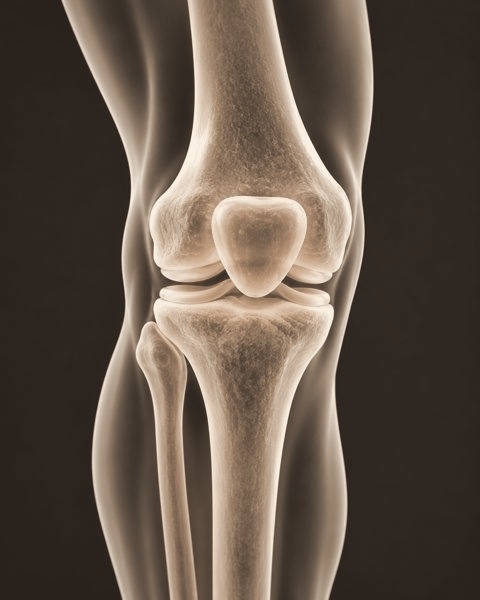
A knee replacement is for a knee worn down by arthritis, when the pain, stiffness and swelling no longer respond to other treatment. Under a general or a spinal anaesthetic, the surgeon removes the damaged surfaces at the ends of the thigh bone and the shin bone and caps them with smooth metal parts, with a plastic insert between them that lets the joint glide. If only one side of the knee is worn, a partial replacement may be possible; the surgeon decides which suits you.
You are up and walking with support soon after the operation, and physiotherapy is the most important part of the recovery: the exercises decide how well the knee bends and straightens. The aim is a knee that no longer hurts, for walking, stairs and sleep. It takes months to recover fully, and kneeling often stays uncomfortable even when the knee is otherwise working well.
Short answers to what people ask us most. Open a question to read the answer.
All frequently asked questionsYour question isn't here?
Ask us in the chat Or send us a message from the Contact pageYes, usually. Physiotherapy normally starts in the hospital and carries on for weeks at home, and the hospital gives you an exercise plan to take with you. At home it is arranged in your own public system in the usual way, and it can involve a wait, so raise it with your doctor before you leave.
When the surgeon says you are fit to fly. Your surgeon makes that call, and the hospital's usual timing is in the written proposal. Choose flights that can be changed, and ask the airline for help at the airport if walking is hard; it is free and must be booked in advance.
That depends on your recovery and on the kind of work you do, so the surgeon decides, and your own doctor follows it up at home. Ask the surgeon before you are discharged; the answer can go into your discharge report. If you need a sick note for your employer, tell us before you travel, and we ask the hospital what it can give you.
No. The Cross Border Directive does not ask you to leave a waiting list to use it, and you stay on it until you have been treated. Once your operation is done abroad, you let your hospital at home know, so it can take you off the list. If you change your mind before then, nothing has changed at home.
Yes. You pay the hospital directly, and your public health service pays you back afterwards; how long that takes depends on your country, and we tell you before you decide. Some people use savings or help from their family. We do not lend money or arrange loans, and no money of yours passes through us.
You see the hospital and the surgeon's name in writing before you decide anything, and you have a consultation with the surgeon before the operation, by video or in person as your country's rules require. Every hospital we work with must be registered with its country's health authorities, use surgeons who specialise in the operation, give its price and its terms on complications in writing, and give you an English-speaking contact person. The hospital that treats you is responsible for your care, and it must have a complaints procedure. We help you deal with the hospital, and at home your own doctor takes over as after any operation.
There is no catch. The hospital that treats you pays us a referral fee; you never pay us anything, and the hospital's price is fixed in writing before you accept. You can stop at any time before you sign with the hospital.
The Cross Border Directive is EU law, and 290,000 claims were paid back across Europe in 2024 alone. The refund is yours when your country's rules are met: usually a referral, any permission your country asks for in advance, the itemised invoice and your receipt. We check your country's rules with you before you pay anything, and we prepare the claim with you.
Yes. A family member can join every call and meeting, be named on your Consent Form and travel with you. Their travel and hotel are your own cost.
One free call, by video or phone. No commitment and no documents.

by video or phone, at a time you pick
Already spoken with us? Start your case →